• What is Ergonomics & Human Factors?
  • Manufacturing & Industrial Ergonomics
  • Office Ergonomics
  • Workplace Assessments
  • Ergonomics-as-a-Service
  • Sustainability & ESG
  • Building Safety Human Factors
  • Expert Witness Services
  • Blogs
  • About
  • Contact Julie
Menu

Julie Rainey

Chartered Ergonomist & Human Factors Specialist
  • What is Ergonomics & Human Factors?
  • Manufacturing & Industrial Ergonomics
  • Office Ergonomics
  • Workplace Assessments
  • Ergonomics-as-a-Service
  • Sustainability & ESG
  • Building Safety Human Factors
  • Expert Witness Services
  • Blogs
  • About
  • Contact Julie

Ergonomics & Human Factors Insights from a Chartered Ergonomist

Practical workplace Ergonomics and Human Factors advice for manufacturing, food production, engineering, logistics and office environments across Northern Ireland, UK and Ireland. My latest content covers MSD prevention, manual handling, production line Ergonomics, DSE assessments and building the business case for proactive workplace safety.

The Synergy between Cybersecurity and Human Factors

May 15, 2022

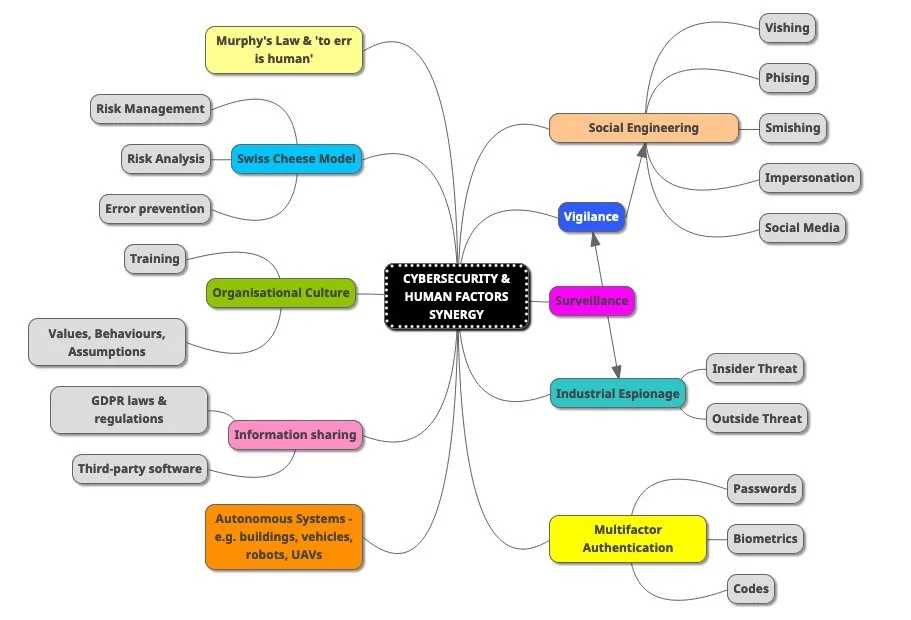
Batman and Robin, Butch Cassidy and the Sundance Kid, cybersecurity and Human Factors. What do they all have in common? They all have synergy. When thinking about cybersecurity, one does not automatically think about the relevance of Human Factors. However, this blog will attempt to enlighten the reader on the importance of the synergy between cybersecurity and Human Factors.

First, we need some definitions so that we are all on the same page. Cybersecurity can be defined as the technologies, processes and people that are designed to protect systems, networks and data from cyber attacks. Human Factors can be defined as improving the interactions between humans and machines.

The golden rule of cybersecurity is that “the human is the weakest link”. This claim can be backed up by the fact that 95% of all cybersecurity incidents are caused by human error (Clark and Misstear, 2021). This is where Human Factors comes into play, since the human is a fundamental part of where things can go wrong in cybersecurity. Since the human is the end user, Murphy’s Law, “anything that can go wrong will go wrong”, and the phrase ‘to err is human’ should be carefully considered with cybersecurity.

A first step to improve cybersecurity, on an individual level, is by implementing Multi-factor authentication (MFA). This applies when there is more than one step to access a given system. There are three main aspects of this. MFA is something that you

 know (password)

have (phone or email to get another code sent to you)

are (biometrics - a fingerprint or iris scan)

While using MFA is far more secure, it can often be perceived as inconvenient. Reliance on MFA is better assured if users understand why they should follow the steps. The instructions also need to be clear, intuitive and the authentication needs to be seamless, which helps to improve the user experience (UX).

Organisational culture is a key way to combat cyber threats/attacks. Organisational culture defines how an organisation defines its shared values and assumptions on how people behave and interact and how work activities should be carried out. Therefore, an organisation’s cybersecurity culture determines how secure it is. A robust organisational culture is vital to improve cybersecurity and is can be fostered by providing training for employees on appropriate behaviour, assumptions and values. For example, by encouraging strong passwords, implementing MFA, banning the use of USBs and thinking twice about what is said and shared in emails. Employees social media posts and images are often used and abused by social engineers to achieve their aims too. It would also be wise to enlighten employees on best practice when information sharing.

Social Engineering is a form of psychological manipulation on individuals and a popular tactic among hackers as a first step to gain access personal information or entry to a system. Individuals should also remain vigilant for forms of social engineering such as (spear) phishing, vishing and smishing. Phishing is when an electronic communication pretends to come from a legitimate source but is in fact an attempt to install malware on the recipient’s device to get sensitive information from the recipient. Impersonation is another tactic used. Avoiding falling for social engineering also includes thinking twice about holding a door open to the business for someone they have never seen. Someone could walk straight to the system that they want access to without even being stopped.

The Swiss Cheese Model (SCM) is an important concept in risk analysis and management and error prevention, both relevant and used in the fields of (cyber)security and Human Factors. The SCM is helpful for identifying weak spots, developing strategies to avoid weaknesses and error and to demonstrate the value of adding additional layers of protection to any system. Think of the holes in the cheese as places cyber attacks can penetrate. By having many layers of cheese (protection) this will make it far harder for the holes to line up, i.e. make it harder for cyber threats to penetrate a system.

The term Industrial Espionage covers a range of activities performed to gain competitive advantages or sabotage and involves insider and outside threats. This is where human motivation and ability to penetrate systems meet in a destructive manner. Insider threats could be an aggrieved employee who has a bone to pick with a company. Make the working conditions and salaries conducive to happy employees. Outsider threats could be rival companies trying to access information to gain commercial advantage. There also could be state actors if the organisation or company deals with systems that are sensitive to national security.

Autonomous Systems include autonomous control of buildings, warehouses or vehicles, UAV’s, robots that interact with humans and software for assisting human tasks. Whilst an autonomous system can greatly assist humans in hazardous, physical or cognitively demanding tasks and environments as well as process and analyse vast quantities of data entire systems, it will have vulnerabilities. Implementing Human Factors and security strategies such as modelling, surveillance, vigilance and training are essential. All lines of technology and human defence are need to be implemented given the huge security and safety implications if a system is breached.

There is often a common misconception that cyber threats are carried about by hoodie wearing hackers in a darkened room frantically typing creating persistent and unstoppable threats. The reality is that the human on the receiving end has many simple lines of defence that can make the cyber attackers' efforts far more difficult. None of the techniques mentioned in this blog need any advanced technical training to mitigate the risk of cyber attacks. The implementation of Human Factors and an increased awareness and understanding of cyber threats can significantly improve the cybersecurity of a system.

Published by Adam J Rainey


Bibliography

Clark, N. & Misstear, S. (2020). The Human Firewall. The Ergonomist, 8-9.

Meeuwisse, R. (2017). Cyber Security for Beginners.

Source: https://www.linkedin.com/pulse/synergy-bet...
In Cybersecurity

BROWSE BLOGS HERE

Featured
Safety Culture in Manufacturing: Where Does Ergonomics Fit In?
August 18, 2026
Safety Culture in Manufacturing: Where Does Ergonomics Fit In?
August 18, 2026

Safety culture programmes in manufacturing often overlook Ergonomics and Human Factors. But the two are inseparable. Here is where Ergonomics fits in and why it matters for your organisation.

Read more →
August 18, 2026
The 20/20/20 Rule: Digital Eye Strain and DSE Assessments in Northern Ireland
July 21, 2026
The 20/20/20 Rule: Digital Eye Strain and DSE Assessments in Northern Ireland
July 21, 2026

The 20/20/20 rule is a simple, evidence-based way to reduce digital eye strain at work. Here's the research behind it, and how it fits into DSE assessments in Belfast and Northern Ireland.

Read more →
July 21, 2026
dse77.png
July 21, 2026
Who is Carrying Out Your DSE Assessments And Are They Trained to Do It?
July 21, 2026

DSE assessment responsibility often lands with whoever seems like the logical choice. But has that person ever been trained to do it? Here's what the law actually requires and what your options are.

Read more →
July 21, 2026
The Case for Proactive Ergonomics
July 11, 2026
The Case for Proactive Ergonomics
July 11, 2026

Why proactive Ergonomics means identifying and designing out failure conditions long before they reach the frontline, drawing on James Reason's Swiss Cheese Model to make the case for involving Ergonomics at the design stage, not just after an incident has already happened.

Read more →
July 11, 2026
Driver Ergonomics Assessments: Reducing the Risk of Driving-Related Discomfort
June 25, 2026
Driver Ergonomics Assessments: Reducing the Risk of Driving-Related Discomfort
June 25, 2026

Do you experience back pain or discomfort when driving for work? A Driver Ergonomics Assessment carried out by a Chartered Ergonomist identifies the specific risk factors and provides clear, practical recommendations. Based in Northern Ireland.

Read more →
June 25, 2026
Are you carrying out DSE risk assessments? Many Northern Ireland businesses are not. And if so, are they legally compliant?
June 6, 2026
Are you carrying out DSE risk assessments? Many Northern Ireland businesses are not. And if so, are they legally compliant?
June 6, 2026

Many Northern Ireland employers are unclear about their legal duties around DSE risk assessments. Some don't know assessments are required at all. Others treat them as something triggered by a problem rather than a baseline obligation. This article sets out what the law requires and what a compliant approach looks like.

Read more →
June 6, 2026
Ergonomics Is Not Just a Better Chair: What Manufacturers and Engineers Need to Know
June 1, 2026
Ergonomics Is Not Just a Better Chair: What Manufacturers and Engineers Need to Know
June 1, 2026

Most people think Ergonomics means a better chair. It does, but it is so much more than that. This article sets out what Ergonomics and Human Factors actually covers, why it matters in manufacturing and engineering, and what organisations stand to gain by engaging with the full scope of the discipline.

Read more →
June 1, 2026
Ergonomics in DFMEA: Why Human Factors Belongs at the Design Table
May 19, 2026
Ergonomics in DFMEA: Why Human Factors Belongs at the Design Table
May 19, 2026

Most DFMEA processes identify operator error as a failure mode. But does the analysis go far enough? This article explores how Ergonomics and Human Factors strengthens design-stage risk assessment by treating the human as a system component whose performance is shaped by design decisions.

Read more →
May 19, 2026
Lean optimises the process. Ergonomics optimises the human. Together, they drive performance and productivity.
April 10, 2026
Lean optimises the process. Ergonomics optimises the human. Together, they drive performance and productivity.
April 10, 2026

Lean optimises the process. Ergonomics optimises the human. Together, they drive performance and productivity. Discover how integrating Ergonomics into your existing Lean tools delivers sustainable results.

Read more →
April 10, 2026
From Reactive to Proactive: The Case for Ergonomics-as-a-Service
April 10, 2026
From Reactive to Proactive: The Case for Ergonomics-as-a-Service
April 10, 2026

Most organisations across Northern Ireland approach Ergonomics reactively, only acting when problems arise. This cycle creates unpredictable costs, delays and no prevention of recurring issues. There is a better way.

Read more →
April 10, 2026
Proactive Ergonomics in Manufacturing: Why Design-Stage Integration Matters
April 1, 2026
Proactive Ergonomics in Manufacturing: Why Design-Stage Integration Matters
April 1, 2026

Manufacturing excellence starts with people, not just processes. Discover why integrating Ergonomics at the design stage prevents costly retrofits, reduces workplace injuries and transforms production performance. Learn how proactive Ergonomics thinking creates safer, more efficient manufacturing operations.

Read more →
April 1, 2026
Work-Related MSDs in Northern Ireland: 2025 Statistics
January 25, 2026
Work-Related MSDs in Northern Ireland: 2025 Statistics
January 25, 2026

HSENI's latest workplace health statistics show work-related MSDs reached 18,000 cases in 2023/24 the highest level in five years. See the sector breakdown focusing on manufacturing and logistics.

Read more →
January 25, 2026
The Simple Fix That Eliminated Back Injuries and Improved Workflow
December 8, 2025
The Simple Fix That Eliminated Back Injuries and Improved Workflow
December 8, 2025

TMX Aerospace eliminated back injuries and improved workflow with a simple solution: raising work to standing height. See how in-house fabricated sawhorses delivered both safety and efficiency gains.This manufacturing ergonomics case study shows how TMX Aerospace prevented musculoskeletal disorders and improved productivity simultaneously. The solution? Simple workplace design changes that eliminated awkward postures while supporting lean manufacturing principles.

Read more →
December 8, 2025
Screenshot 2025-11-24 at 15.14.52.png
November 24, 2025
New HSE Data: What the 2024/25 MSD's Statistics Mean for Your Business
November 24, 2025

The Health and Safety Executive's 2024/25 statistics reveal a mixed picture for work-related MSDs. Whilst total cases decreased to 511,000 workers, new cases rose to 173,000 and upper limb injuries increased to 41%. With 7.1 million working days lost, this analysis examines what these trends mean for businesses across Northern Ireland, the UK and Ireland in high-risk sectors and why proactive Ergonomic intervention remains critical.

Read more →
November 24, 2025
Integrating Ergonomics into Lean Manufacturing: The Overlooked Opportunity
November 19, 2025
Integrating Ergonomics into Lean Manufacturing: The Overlooked Opportunity
November 19, 2025

Lean and Ergonomics solve the same problems but rarely work together. This disconnect is a missed opportunity. Ergonomic injuries are waste. Integrating Ergonomics into lean practices from the start creates better solutions, avoids costly retrofits and improves both productivity and worker wellbeing.

Read more →
November 19, 2025
The Hidden Health Risks Facing Retail Workers: From Carpal Tunnel to Cold Exposure
October 30, 2025
The Hidden Health Risks Facing Retail Workers: From Carpal Tunnel to Cold Exposure
October 30, 2025

Retail workers face unique health risks from repetitive scanning to cold exposure. This comprehensive guide identifies specific musculoskeletal disorders retail employees develop and provides evidence-based prevention strategies.

Read more →
October 30, 2025
Investing in Retail Ergonomics Isn't Just Ethical, It Makes Commercial Sense
October 30, 2025
Investing in Retail Ergonomics Isn't Just Ethical, It Makes Commercial Sense
October 30, 2025

Over 3 million UK retail workers face underestimated ergonomic challenges. Discover why addressing manual handling, checkout ergonomics and workplace design makes both ethical and commercial sense.

Read more →
October 30, 2025
Manual Handling Training Requirements Northern Ireland: What Employers Must Know
October 28, 2025
Manual Handling Training Requirements Northern Ireland: What Employers Must Know
October 28, 2025

Manual Handling remains one of the leading causes of workplace injury across Northern Ireland. This guide explains employer obligations under the Manual Handling Operations Regulations (Northern Ireland) 1992, including who needs training, how often refresher training should occur and what HSENI expects from Northern Ireland businesses.

Read more →
October 28, 2025
Work-Related MSDs: The Hidden Cost Your Business Can't Ignore
October 23, 2025
Work-Related MSDs: The Hidden Cost Your Business Can't Ignore
October 23, 2025

543,000 workers suffering from MSDs. 7.8 million working days lost. Discover why work-related musculoskeletal disorders are the hidden cost your business can't ignore and how Ergonomics expertise can prevent them.

Read more →
October 23, 2025
IWm-LPl19gJ-NjdjGP5-l.png
October 23, 2025
What Does C.ErgHF Mean? Your Guide to Chartered Ergonomists in the UK
October 23, 2025

What separates a Chartered Ergonomist from other practitioners? Discover what C.ErgHF status means, the professional standards required and how to distinguish genuine expertise.

Read more →
October 23, 2025
Manual Handling Guidance: Essential Workplace Safety Principles
October 21, 2025
Manual Handling Guidance: Essential Workplace Safety Principles
October 21, 2025

Manual Handling injuries remain one of the most common causes of workplace absence across the UK. This guide covers the essential principles of Manual Handling risk assessment, legal requirements and practical controls that protect your workforce whilst improving productivity and staff retention.

Read more →
October 21, 2025
DSE Assessments in Northern Ireland: Your Complete Guide
October 16, 2025
DSE Assessments in Northern Ireland: Your Complete Guide
October 16, 2025

Discover why DSE assessments are essential for Belfast and Northern Ireland workplaces, when they're legally required and how professional ergonomic assessment protects your team from workplace injuries.

Read more →
October 16, 2025
Work-related MSDs are the hidden cost your business can't ignore
October 3, 2025
Work-related MSDs are the hidden cost your business can't ignore
October 3, 2025

543,000 UK workers suffer from MSDs, costing 7.8 million working days annually. Discover why specialist ergonomics expertise, not just H&S protocols, is essential to protect your workforce and bottom line.

Read more →
October 3, 2025
Screenshot 2025-10-16 at 13.09.30.png
September 10, 2025
The Business Case for Ergonomics and Human Factors
September 10, 2025

Discover how Ergonomics and Human Factors creates a win-win scenario for employee wellbeing and business profitability. Learn why ergonomics is essential for workplace success in 2025.

Read more →
September 10, 2025
Expert Manual Handling Training by Chartered Ergonomist
September 8, 2025
Expert Manual Handling Training by Chartered Ergonomist
September 8, 2025

Get expert manual handling training in Northern Ireland from a Chartered Ergonomist. Customised training for your workplace with standard or assessment-led options. Serving Belfast, Newtownards, Ballymena and across NI.

Read more →
September 8, 2025
AviationMindMap1.jpg
May 15, 2022
The Synergy between Future Aviation & Human Factors
May 15, 2022
Read more →
May 15, 2022
The Synergy between Cybersecurity and Human Factors
May 15, 2022
The Synergy between Cybersecurity and Human Factors
May 15, 2022
Read more →
May 15, 2022
Ergonomics Infographics Series  - Manufacturing & Production Ergonomics
February 9, 2022
Ergonomics Infographics Series - Manufacturing & Production Ergonomics
February 9, 2022
Read more →
February 9, 2022
Biophilic Design - Human Connection with Nature
December 1, 2021
Biophilic Design - Human Connection with Nature
December 1, 2021

Why as Human Factors professionals should we be interested in Biophilic Design?

As Human Factors professionals we are aiming to create environments that;

are physically, physiological and mentally healthy

comfortable & happy

improve cognitive function > creativity, less error, improve concentration & performance

improve productivity

lower levels of absenteeism (cost and manpower impact)

lower employee turnover, improve employee retention, creating environment that enhance social connections

Read more →
December 1, 2021
20210114-rw-rf-007239.jpg
February 17, 2021
Holistic design and the need to reconnect with nature for well-being to be the main features for built environment design in 2021
February 17, 2021
Read more →
February 17, 2021

© 2025 Ergo & Wellbeing Ltd. All rights reserved.