From Reactive to Proactive: The Case for Ergonomics-as-a-Service

The Problem with Waiting
Most organisations across Northern Ireland approach Ergonomics the same way. They wait. A worker reports discomfort. A near miss occurs on the production floor. A DSE complaint lands in HR. Only then does Ergonomics become a priority.
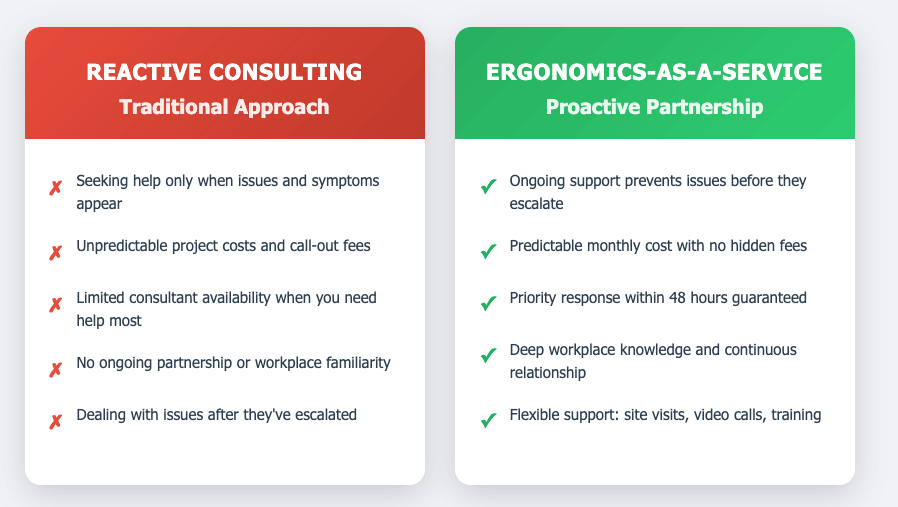
This reactive approach creates a predictable cycle. Unplanned costs when issues arise. Delays in getting expert support. No continuity between one intervention and the next. And crucially, no prevention of the problems that keep occurring.
The costs are significant. The Health and Safety Executive estimates work-related musculoskeletal disorders alone cost Great Britain £9.6 billion annually. Manufacturing accounts for a disproportionate share of those cases. In Northern Ireland, HSENI recorded 18,000 MSD cases in 2023/24, with manufacturing representing 13.5% of all cases.
Most of those injuries were preventable.
A Different Approach
Ergonomics-as-a-Service is a monthly retainer model that shifts Ergonomics support from reactive to proactive. Rather than commissioning one-off assessments when problems arise, you have dedicated Ergonomics support available on an ongoing basis, used flexibly across your organisation's changing needs.
This is not a subscription to a software tool or an automated service. It is direct access to a Chartered Ergonomist, personally providing support across your operations throughout the month.
How It Works
Your monthly allocation is used however your business needs dictate. Site visits for production line assessments. Remote consultancy for immediate guidance on equipment changes. Training delivery for supervisors or new starters. Incident investigation when something goes wrong. Documentation support for regulatory compliance.
The balance shifts month by month based on what your operations require. During a production line reconfiguration, the focus might be heavily on-site assessment. During a quieter period, it might be staff training or risk documentation. The flexibility means expert support is always aligned to your current priorities.
Unused allocation rolls over to the following month. Additional support is available when needed. Packages are sized to your organisation, whether you are a single-site food production facility or a multi-site engineering operation.
Why It Matters for Operations Directors and Business Owners
The business case is straightforward. Reactive Ergonomics is expensive. A single MSD case carries direct costs through absence, cover, treatment and potential employer's liability exposure. Indirect costs, including reduced productivity, management time, recruitment and retraining, compound the direct figure significantly.
Proactive Ergonomics prevents those costs. It also delivers operational benefits that reactive approaches never reach. Production line inefficiencies identified and resolved before they affect output. Manual handling risks addressed before they result in injury. New equipment procured with Ergonomics considered from the outset rather than retrofitted afterwards.
Regulatory compliance is maintained continuously rather than scrambled for when an inspection or incident demands it. Documentation demonstrates due diligence. Staff see visible investment in their wellbeing, which supports retention and engagement in sectors where recruitment is challenging.
Who Benefits Most
Manufacturing, food production and engineering operations facing constant change, new equipment, process modifications and workforce training needs find particular value in ongoing support that keeps pace with operational change.
Logistics and warehousing operations with high manual handling exposure and variable workforces benefit from consistent oversight and training that reduces the injury risk inherent in high-throughput environments.
Growing companies whose Ergonomics needs fluctuate with business changes, new premises or workforce expansion find the flexible retainer model far more practical than commissioning new assessments every time circumstances change.
Getting Started
The transition from reactive to proactive Ergonomics support starts with a free 20-minute discussion about your current challenges and what ongoing support would look like for your organisation. From there, a tailored package proposal sets out exactly what is included, what the monthly allocation covers and how the retainer adapts to your needs.
The question is not whether your workplace needs Ergonomics support. The question is whether you address it proactively, preventing problems before they cost you, or reactively, after they already have.
Find out more about the Ergonomics-as-a-Service retainer or contact Julie to discuss your requirements.