
Every manufacturer knows the cost of a problem that surfaces after commissioning. Redesigns, retrofits, lost production time - the bill grows fast. Design Failure Mode and Effects Analysis (DFMEA) exists precisely to prevent that. Identify the failure modes early, assess the risk, put controls in place. It is a sound process. But most DFMEA teams are missing a critical perspective at the table - and the consequences show up later on the shop floor.
What is DFMEA?
DFMEA is a structured, proactive risk assessment tool used during the product or process design phase. Engineering teams use it to identify potential failure modes, evaluate their impact on the user and the system, and define corrective actions before production begins.
The process works by assessing each failure mode against three criteria: severity, likelihood of occurrence and detectability. These are combined into a Risk Priority Number (RPN), which helps teams prioritise where to focus their mitigation efforts. The higher the RPN, the greater the risk.
It is used across automotive, aerospace, defence, industrial manufacturing and healthcare - any sector where the cost of failure is high and the window for correction narrows fast once production begins.
The Gap Nobody Talks About
Operator error appears on most DFMEA matrices. It is recognised as a failure mode. But recognising that an operator might make an error is not the same as understanding why - or whether the design itself is creating the conditions for it.
This is the gap. DFMEA as typically practised identifies that humans may fail. What it rarely does is ask whether the design makes the task physically sustainable, cognitively manageable and environmentally appropriate across a full production shift.
An awkward posture baked into a fixture. A grip force demand that only becomes apparent when someone is actually using the tool under production conditions. A reach distance that looks acceptable on a drawing but cannot be maintained eight hours a day, five days a week without cumulative injury. These are not unpredictable human errors. They are design-induced failure modes - and without Ergonomics and Human Factors (EHF) expertise in the room, they rarely make it onto the matrix.
What Ergonomics and Human Factors Brings to DFMEA
Integrating EHF into DFMEA shifts the analysis from identifying that humans might fail to understanding the conditions that make failure predictable. It treats the human not just as an error source but as a system component whose performance is shaped by design decisions.
This matters because human performance is not fixed. It is influenced by how a workstation is designed, how a tool fits the hand, how information is displayed and how the environment supports or undermines the task. Get these wrong at design stage and you have not just a safety problem - you have a productivity problem, a quality problem and an absenteeism problem built into the system before a single unit has been produced.
EHF brings three critical dimensions to DFMEA that engineering analysis alone cannot provide.
Physical Ergonomics
This dimension focuses on the anatomical and biomechanical demands of the task. Failure modes include repetitive strain, awkward postures, excessive force requirements and reach zones that exceed comfortable working limits. Mitigations include adjustable components, optimised reach envelopes and reduced actuation forces - changes that are straightforward and low cost at design stage and expensive to retrofit after commissioning.
Cognitive Human Factors
This dimension focuses on mental workload, decision-making and usability. Failure modes include confusing control layouts, illegible displays and alarm fatigue - conditions that cause operators to miss critical warnings or make errors under pressure. Mitigations include intuitive interface design, clear visual and auditory cues and error-proofing principles familiar to Lean practitioners as poka-yoke.
Environment and Layout
This dimension evaluates the physical conditions in which people actually work. Poor lighting, extreme temperatures and vibration all degrade human performance and increase error risk in ways that are not captured by mechanical failure analysis. Each is assessable and scoreable within the RPN framework.
The Cost Argument
The business case for integrating EHF at design stage is straightforward. Research consistently shows that the cost of addressing a design problem increases exponentially the later it is identified in the product life cycle. A change at design stage costs a fraction of what the same change costs after commissioning - and a fraction again of what it costs when it manifests as a musculoskeletal injury, a quality failure or a production stoppage.
A Perspective from the Production Floor
During my time as an Ergonomics Specialist at Airbus, I worked alongside engineering teams using DFMEA on a new production line project. Used well, it is a genuinely powerful tool. What I observed was that where EHF was part of the conversation at design stage, the process captured failure modes that would otherwise have only surfaced once workers were on the line. Early-stage design decisions shape the physical demands placed on assembly workers in ways that drawings alone cannot reveal. Bringing EHF into that process means those demands are assessed, scored and mitigated before they are built in.
Who Should Be in the Room
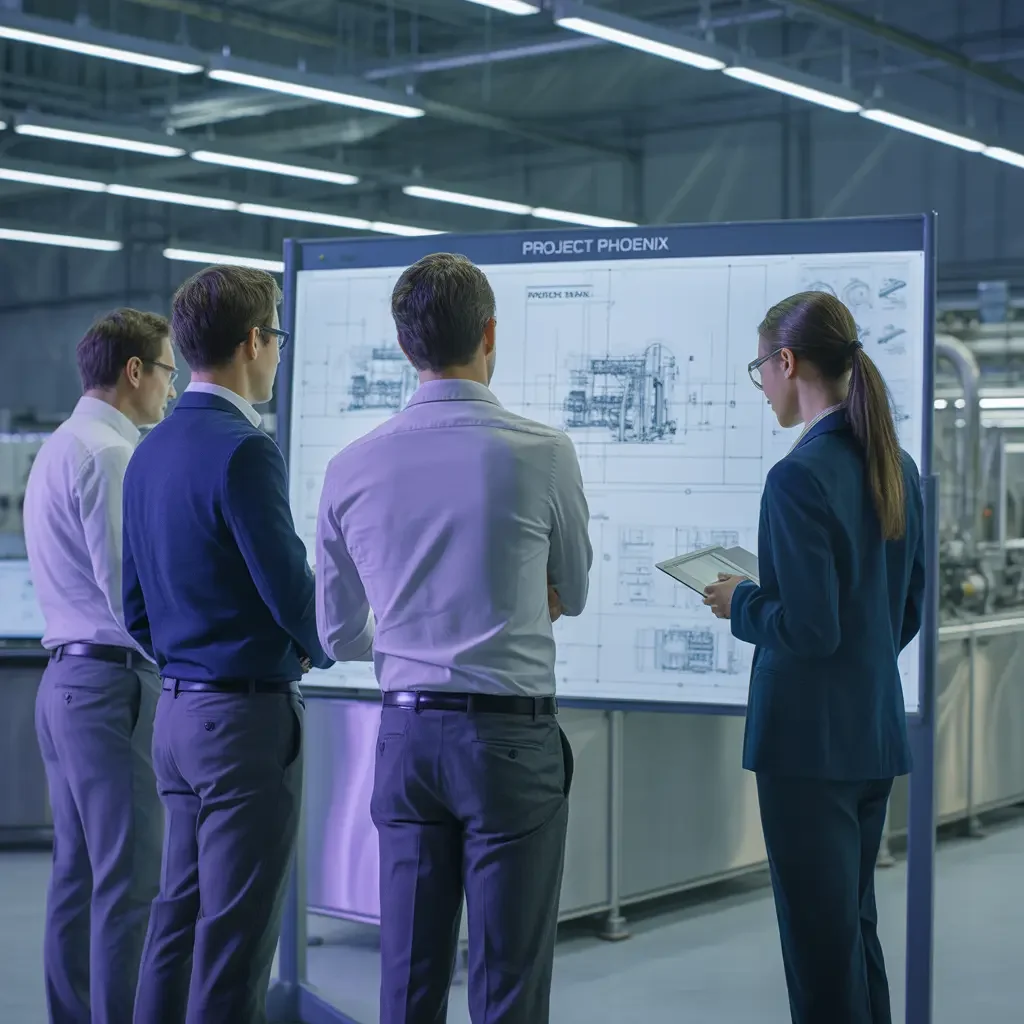
DFMEA best practice calls for a cross-functional team - design, manufacturing, test, logistics and quality. The rationale is sound: different disciplines bring different failure mode perspectives that a single team cannot replicate alone.
A Chartered Ergonomist and Human Factors Specialist is exactly that kind of contribution. Not a generalist safety adviser, but a specialist who can assess physical demands against biomechanical limits, evaluate cognitive load against human performance data and score human-centred failure modes within the existing RPN framework.
The methodology is already there. The rigour is already there. What EHF adds is the specialist insight to turn operator error from an assumption into an analysable, preventable failure mode.
Where Ergonomics Belongs
The decisions that determine whether people can work safely, comfortably, effectively and efficiently are made at design stage. Not on the shop floor. Not after commissioning. At the point when changes cost a fraction of what they will later.
If you are involved in DFMEA for engineering, construction or manufacturing projects and want to explore how Ergonomics and Human Factors input could strengthen your design risk process, I would be glad to have that conversation.