
• What is Ergonomics & Human Factors?
  • Manufacturing & Industrial Ergonomics
  • Office Ergonomics
  • Workplace Assessments
  • Ergonomics-as-a-Service
  • Sustainability & ESG
  • Building Safety Human Factors
  • Expert Witness Services
  • Blogs
  • About
  • Contact Julie
Menu

Julie Rainey

Chartered Ergonomist & Human Factors Specialist
  • What is Ergonomics & Human Factors?
  • Manufacturing & Industrial Ergonomics
  • Office Ergonomics
  • Workplace Assessments
  • Ergonomics-as-a-Service
  • Sustainability & ESG
  • Building Safety Human Factors
  • Expert Witness Services
  • Blogs
  • About
  • Contact Julie

Ergonomics & Human Factors Insights from a Chartered Ergonomist

Practical workplace Ergonomics and Human Factors advice for manufacturing, food production, engineering, logistics and office environments across Northern Ireland, UK and Ireland. My latest content covers MSD prevention, manual handling, production line Ergonomics, DSE assessments and building the business case for proactive workplace safety.

Who is Carrying Out Your DSE Assessments And Are They Trained to Do It?

July 21, 2026

In many organisations, DSE assessment responsibility lands with whoever seems like the logical choice. The HR Manager. The Health and Safety lead. The office manager who already handles a dozen other compliance tasks. Sometimes it's simply whoever put their hand up.

That's not necessarily wrong. But there's a question that often goes unasked: have they actually been trained to do it?

What the Law Says

The Health and Safety (Display Screen Equipment) Regulations 1992 require employers to ensure that workstation assessments are carried out by a competent person. The HSE's own guidance on this, L26 (Work with Display Screen Equipment), makes clear that a DSE Assessor doesn't need a formal qualification. What they do need is competence. In Northern Ireland, it is HSENI (the Health and Safety Executive for Northern Ireland) that enforces these Regulations, but the legal requirement and the standard of competence expected are the same.

Competence, in this context, means being trained to recognise the risk factors involved, knowing what to look for and understanding what action to take when something isn't right. That's a specific set of knowledge and skills, not something that comes automatically with a job title or years of general experience.

In my work across Northern Ireland and the wider UK, I come across businesses where this training was simply never provided. The person doing the assessments was told what to do, handed a checklist and got on with it. The intention was good. The gap was the training.

When Assessments Are Actually Required

Another area where businesses often fall short is understanding when an assessment is needed. DSE assessments aren't a one-off exercise when someone joins the organisation.

Under the Regulations, an assessment should be carried out or reviewed:

  • When a new workstation is set up or an existing one is significantly changed

  • When a DSE user changes role and their workstation setup changes with it

  • When a user reports discomfort, pain or visual difficulties that may be work-related

  • After a return from extended absence

Beyond these legal triggers, best practice suggests a periodic review, typically every one to two years, even where nothing specific has changed. Workstations drift over time. People adjust their setup, change their chair height, move equipment around or bring in their own kit. A periodic check catches those changes before they become problems.

The Risk of Getting This Wrong

Poorly conducted DSE assessments don't just create a compliance gap. They can result in musculoskeletal problems, eye strain and fatigue that go unaddressed, sometimes for months or years. When someone eventually does report a problem, the question will be whether their workstation was ever properly assessed.

An assessment carried out without adequate training is unlikely to identify the issues that matter. A trained assessor knows how to look at posture, equipment positioning, the wider environment and the interaction between them. They also know when something is outside their scope and needs to be referred on to Occupational Health or a Chartered Ergonomist.

DSE Assessor Training

I run a DSE Assessor Training course for businesses across Northern Ireland, designed for exactly the situations I've described above. It's practical and hands-on, covering:designed for exactly the situations I've described above. It's practical and hands-on, covering:

  • The legal framework and what the DSE Regulations actually require

  • Who counts as a DSE user

  • When an assessment needs to be carried out

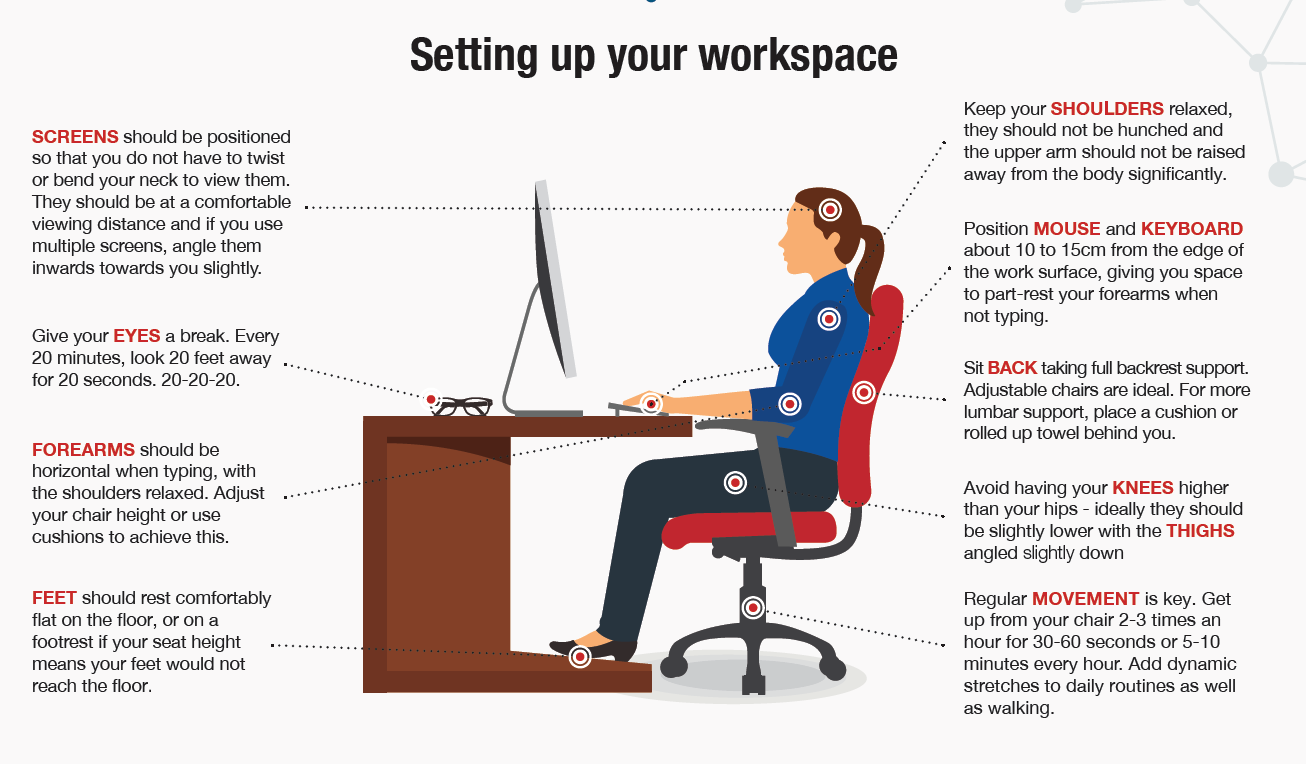
  • A step-by-step walkthrough of assessing posture, equipment and the wider environment

  • How to complete the workstation checklist properly, including the final questions and follow-up that often gets skipped

  • When to refer on to Occupational Health or a Chartered Ergonomist

The session ends with a practical assessment at a real workstation. Delegates leave having actually done an assessment, not just having sat through a presentation about one.

Alternatively: Let Me Do the Assessments for You

If the right answer for your organisation is to have the assessments carried out by a specialist rather than training someone in-house, that's something I offer too.

With hundreds of DSE assessments behind me, I work through workplace assessments efficiently, providing each individual with a clear, actionable assessment report. Organisations also receive a summary report covering common themes and priority actions, and I can provide a manager briefing where that would be useful.

Which Option Is Right for You?

That depends on the size of your organisation, how frequently your workforce changes and the resource you have available. Both options are available to businesses across Northern Ireland.

Training an in-house DSE Assessor makes sense where you have a stable workforce, a designated person with capacity to take this on properly, and a reasonable volume of ongoing assessment activity. It gives you an internal capability that can respond quickly when a trigger event occurs.

Bringing in an external assessor makes sense where you need a large number of assessments completed efficiently, where you don't have a suitable person to train, or where the complexity of your workplace warrants specialist input.

Both options are available, and for some organisations a combination works best.

Get in Touch

If you're unsure whether your current approach to DSE assessment is meeting your legal obligations, or if you'd like to discuss training or assessment services, I'm happy to have a conversation. I work with businesses across Northern Ireland and would be glad to help you find the right approach for your organisation.

Contact Julie

Julie Rainey MSc C.ErgHF MCIEHF MIHFES is a Chartered Ergonomist and Human Factors Specialist and the founder of Ergo & Wellbeing Ltd. She works with businesses across Northern Ireland and the wider UK on ergonomics, workplace design and DSE compliance.
← The 20/20/20 Rule: Digital Eye Strain and DSE Assessments in Northern IrelandThe Case for Proactive Ergonomics →

BROWSE BLOGS HERE

Featured
The 20/20/20 Rule: Digital Eye Strain and DSE Assessments in Northern Ireland
July 21, 2026
The 20/20/20 Rule: Digital Eye Strain and DSE Assessments in Northern Ireland
July 21, 2026
July 21, 2026
dse77.png
July 21, 2026
Who is Carrying Out Your DSE Assessments And Are They Trained to Do It?
July 21, 2026
July 21, 2026
The Case for Proactive Ergonomics
July 11, 2026
The Case for Proactive Ergonomics
July 11, 2026
July 11, 2026
Driver Ergonomics Assessments: Reducing the Risk of Driving-Related Discomfort
June 25, 2026
Driver Ergonomics Assessments: Reducing the Risk of Driving-Related Discomfort
June 25, 2026
June 25, 2026
Are you carrying out DSE risk assessments? Many Northern Ireland businesses are not. And if so, are they legally compliant?
June 6, 2026
Are you carrying out DSE risk assessments? Many Northern Ireland businesses are not. And if so, are they legally compliant?
June 6, 2026
June 6, 2026
Ergonomics Is Not Just a Better Chair: What Manufacturers and Engineers Need to Know
June 1, 2026
Ergonomics Is Not Just a Better Chair: What Manufacturers and Engineers Need to Know
June 1, 2026
June 1, 2026
Ergonomics in DFMEA: Why Human Factors Belongs at the Design Table
May 19, 2026
Ergonomics in DFMEA: Why Human Factors Belongs at the Design Table
May 19, 2026
May 19, 2026
Lean optimises the process. Ergonomics optimises the human. Together, they drive performance and productivity.
April 10, 2026
Lean optimises the process. Ergonomics optimises the human. Together, they drive performance and productivity.
April 10, 2026
April 10, 2026
From Reactive to Proactive: The Case for Ergonomics-as-a-Service
April 10, 2026
From Reactive to Proactive: The Case for Ergonomics-as-a-Service
April 10, 2026
April 10, 2026
Proactive Ergonomics in Manufacturing: Why Design-Stage Integration Matters
April 1, 2026
Proactive Ergonomics in Manufacturing: Why Design-Stage Integration Matters
April 1, 2026
April 1, 2026
Work-Related MSDs in Northern Ireland: 2025 Statistics
January 25, 2026
Work-Related MSDs in Northern Ireland: 2025 Statistics
January 25, 2026
January 25, 2026
The Simple Fix That Eliminated Back Injuries and Improved Workflow
December 8, 2025
The Simple Fix That Eliminated Back Injuries and Improved Workflow
December 8, 2025
December 8, 2025
Screenshot 2025-11-24 at 15.14.52.png
November 24, 2025
New HSE Data: What the 2024/25 MSD's Statistics Mean for Your Business
November 24, 2025
November 24, 2025
Integrating Ergonomics into Lean Manufacturing: The Overlooked Opportunity
November 19, 2025
Integrating Ergonomics into Lean Manufacturing: The Overlooked Opportunity
November 19, 2025
November 19, 2025
The Hidden Health Risks Facing Retail Workers: From Carpal Tunnel to Cold Exposure
October 30, 2025
The Hidden Health Risks Facing Retail Workers: From Carpal Tunnel to Cold Exposure
October 30, 2025
October 30, 2025
Investing in Retail Ergonomics Isn't Just Ethical, It Makes Commercial Sense
October 30, 2025
Investing in Retail Ergonomics Isn't Just Ethical, It Makes Commercial Sense
October 30, 2025
October 30, 2025
Manual Handling Training Requirements Northern Ireland: What Employers Must Know
October 28, 2025
Manual Handling Training Requirements Northern Ireland: What Employers Must Know
October 28, 2025
October 28, 2025
Work-Related MSDs: The Hidden Cost Your Business Can't Ignore
October 23, 2025
Work-Related MSDs: The Hidden Cost Your Business Can't Ignore
October 23, 2025
October 23, 2025
IWm-LPl19gJ-NjdjGP5-l.png
October 23, 2025
What Does C.ErgHF Mean? Your Guide to Chartered Ergonomists in the UK
October 23, 2025
October 23, 2025
Manual Handling Guidance: Essential Workplace Safety Principles
October 21, 2025
Manual Handling Guidance: Essential Workplace Safety Principles
October 21, 2025
October 21, 2025
DSE Assessments in Northern Ireland: Your Complete Guide
October 16, 2025
DSE Assessments in Northern Ireland: Your Complete Guide
October 16, 2025
October 16, 2025
Work-related MSDs are the hidden cost your business can't ignore
October 3, 2025
Work-related MSDs are the hidden cost your business can't ignore
October 3, 2025
October 3, 2025
Screenshot 2025-10-16 at 13.09.30.png
September 10, 2025
The Business Case for Ergonomics and Human Factors
September 10, 2025
September 10, 2025
Expert Manual Handling Training by Chartered Ergonomist
September 8, 2025
Expert Manual Handling Training by Chartered Ergonomist
September 8, 2025
September 8, 2025
AviationMindMap1.jpg
May 15, 2022
The Synergy between Future Aviation & Human Factors
May 15, 2022
May 15, 2022
The Synergy between Cybersecurity and Human Factors
May 15, 2022
The Synergy between Cybersecurity and Human Factors
May 15, 2022
May 15, 2022
Ergonomics Infographics Series  - Manufacturing & Production Ergonomics
February 9, 2022
Ergonomics Infographics Series - Manufacturing & Production Ergonomics
February 9, 2022
February 9, 2022
Biophilic Design - Human Connection with Nature
December 1, 2021
Biophilic Design - Human Connection with Nature
December 1, 2021
December 1, 2021
20210114-rw-rf-007239.jpg
February 17, 2021
Holistic design and the need to reconnect with nature for well-being to be the main features for built environment design in 2021
February 17, 2021
February 17, 2021
bio5.png
February 17, 2021
Green walls, living walls...creative & stylish biophilic design
February 17, 2021
February 17, 2021

© 2025 Ergo & Wellbeing Ltd. All rights reserved.