Hand-Arm Vibration Risk Assessment Northern Ireland
Ergonomics-led assessments that help Northern Ireland employers understand who is at risk from vibrating tools and how to reduce it.
Hand-Arm Vibration and Your Business
What is hand-arm vibration syndrome?
Hand-arm vibration syndrome (HAVS) is caused when vibration is transmitted to the hands and arms from handheld or hand-guided equipment, or from holding materials against machines. It is a serious and disabling condition. Symptoms include tingling and numbness in the fingers, loss of grip strength and fingers turning white, known as vibration white finger. Cold or damp conditions can trigger painful finger blanching attacks. The damage is permanent, but it is preventable. Regular exposure can also cause carpal tunnel syndrome.
More than half of the diseases reported to HSENI under RIDDOR (NI) in 2025-26 were HAVS.
Which tools can cause it?
Manufacturing, engineering and automotive
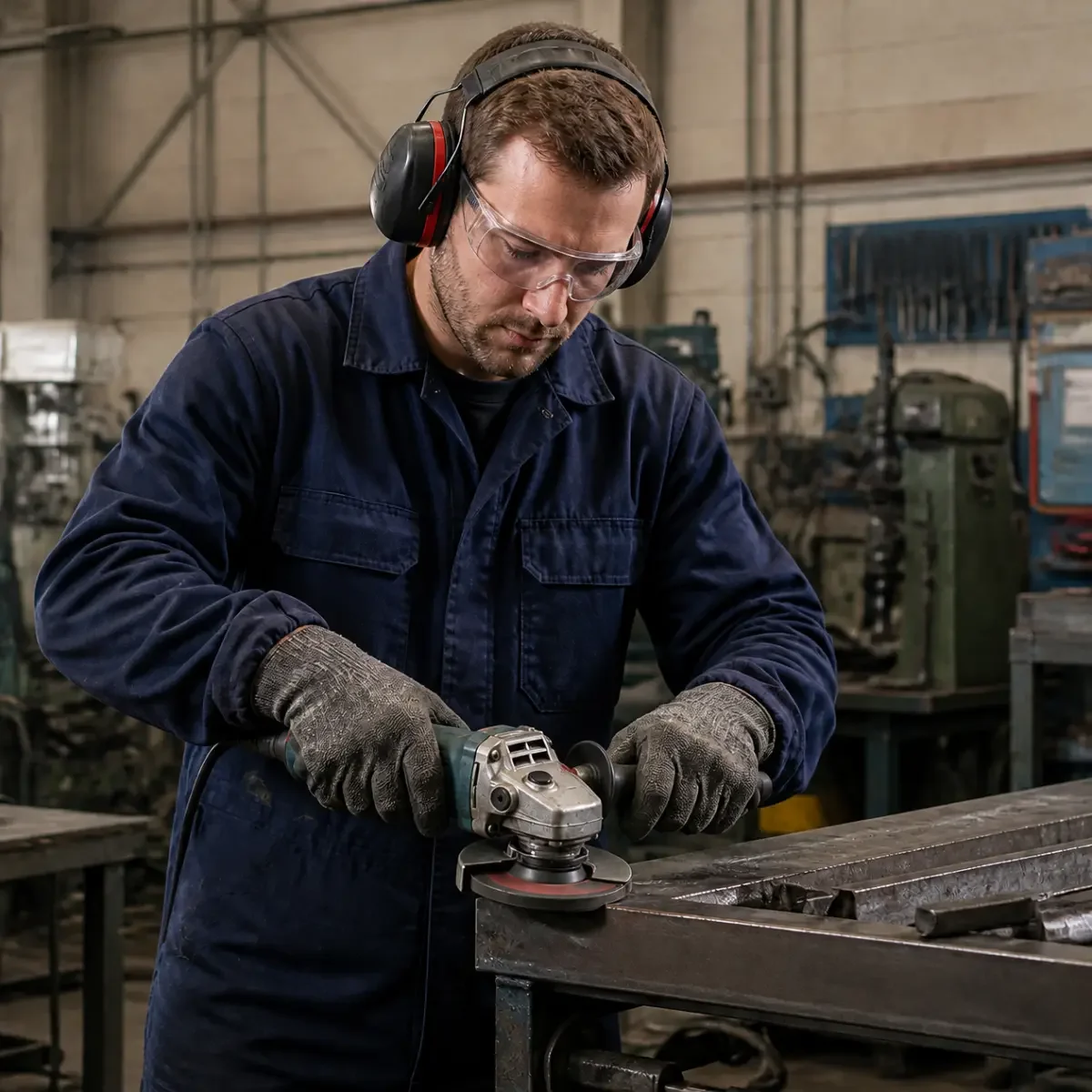
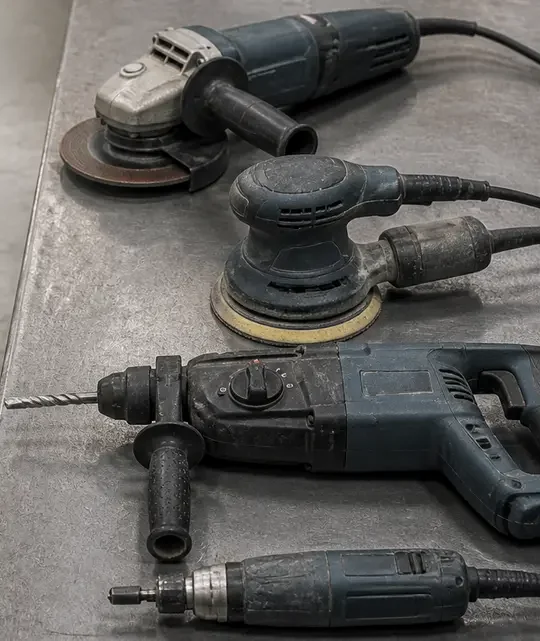
angle, die and straight grinders
sanders and polishers, including orbital sanders
chipping hammers, pneumatic chisels and needle guns
rotary multi-tools
impact drills
handheld saws for metal
hand-fed machines, such as pedestal grinders and linishers
Construction
hammer drills
powered hammers for demolition and road breaking
handheld saws for concrete
floor saws
scabblers
Does this apply to my business?
It applies to any employer whose staff regularly use vibrating tools or hand-fed machines, including:
manufacturing and engineering, including automotive
foundries and metal fabrication
construction
utilities
vehicle maintenance and repair workshops
forestry and grounds maintenance
Occasional exposure is unlikely to cause ill health. As a simple guide, HSE advises that you will probably need to do something about vibration exposure if employees regularly operate hammer action tools for more than about 15 minutes per day, or some rotary and other action tools for more than about one hour per day.
Is this a legal requirement?
Yes. The Control of Vibration at Work Regulations (Northern Ireland) 2005 require employers to prevent or reduce risks from exposure to vibration at work. Employers must:
assess the risk from vibration to employees
decide whether employees are likely to be exposed above the daily exposure action value (EAV) of 2.5 m/s² A(8), and if so, introduce a programme of controls to reduce exposure as far as is reasonably practicable
take immediate action if exposure is likely to be above the daily exposure limit value (ELV) of 5 m/s² A(8), which must not be exceeded
provide health surveillance where there is a risk to health
provide information and training on the health risks and the controls in place
keep a record of the risk assessment and control actions, and review it regularly
We already have a general risk assessment. Isn’t that enough?
Unlikely. The Vibration Regulations require a suitable and sufficient assessment of the risk from vibration. It must identify who is exposed, estimate their daily exposure against the action and limit values and set out the measures needed to reduce it.
We’ve never had a complaint. Why act now?
HSE notes that symptoms can develop after only a few months of exposure, but in most cases over a few years. HAVS is preventable, but once the damage is done it is permanent. The legal duty to assess the risk applies wherever work is liable to expose employees to risk from vibration, whether or not anyone has reported symptoms.
Isn’t monitoring exposure enough?
No. HSENI is clear that continuous monitoring of vibration exposure “is not a risk reduction tool”. To comply with the law, employers must be able to show they have reduced vibration risk to as low as is reasonably practicable, and that takes an understanding of the whole task, not just the tool.
What not to rely on
Measuring every tool. HSE guidance is that measurement is only needed if suitable data cannot be obtained from other sources. Measuring and labelling many tools is time consuming, costly and probably not the best use of resources.
Continuous monitoring. Continuous monitoring of exposure is not a requirement of the Regulations, and resources are better spent reducing exposures.
Tool tagging. HSE advises that tool tagging on its own does not satisfy any requirement of the Regulations and is not a control.
Working up to a limit. The action value is not a safe level of exposure. Telling people to stop work when they reach a limit does not demonstrate that risk has been reduced as far as is reasonably practicable.
Time limits alone. Reducing exposure time is less effective than reducing vibration magnitude, and it often relies on employees managing their own exposure.
Anti-vibration gloves. There is no PPE to control exposure to hand-arm vibration, and HSE advises assuming no reduction in exposure from anti-vibration gloves.
My Hand-Arm Vibration Services
What services do you offer?
I am Julie Rainey MSc C.ErgHF MCIEHF MIHFES, Chartered Ergonomist and Human Factors Specialist, and I offer two hand-arm vibration services for employers.
Hand-arm vibration risk assessment. For businesses with no hand-arm vibration risk assessment programme in place. Following a site visit where I observe the work, including grip, posture and task design, the assessment covers:
The current risk: which tools and processes are used, by whom and for how long, and how daily exposures compare with the legal action and limit values
Advice on control: where control is needed, with prioritised, practical recommendations on how to eliminate or reduce exposure
Referral for health surveillance: which roles should be referred to an occupational health provider for health surveillance
Review of existing arrangements. For businesses with arrangements already in place that want a review to check whether they are compliant and reducing risk in practice. The review covers the risk assessment and controls, including whether the right roles have been identified for health surveillance, and sets out what is working, what falls short and the priorities for putting it right.
What does a hand-arm vibration risk assessment include?
You get a written report that records the significant findings of the risk assessment, as the Regulations require. It covers which roles and tasks were assessed, their estimated daily exposure against the action and limit values, the data used, the controls already in place and a prioritised action plan with owners and timescales. It also sets out which roles need health surveillance, what your employees need to be told and when the assessment should be reviewed. It is built around what HSE guidance expects a suitable and sufficient assessment to contain.
What’s different about an Ergonomist doing this?
The exposure figure is only part of the picture. HSE guidance states that vibration can increase the risk of upper limb disorders, and the risk rises when vibration combines with heavy grip, awkward postures and long periods of use.
An Ergonomics-led assessment looks at how the work is actually done: the tool, the grip, the posture and how the task and workstation are set up. That is often where the most effective and practical improvements are found.
Don’t you need to measure the tools?
Not usually. HSE guidance is that you only need to measure vibration if you cannot get suitable data for your risk assessment from other sources. HSE publishes typical vibration levels for many common tools, and this published data is used to estimate exposures and decide what action is needed.
Measurement may be worthwhile where no suitable data exists for a tool or task, or where you want data for your own tools. It should be carried out by a competent person with specialised equipment. HSE advises that BS EN ISO 5349-2 and Appendix 2 of L140 should be used for guidance on measurement. Where measurement would genuinely help, my report will say so.
Continuous monitoring of daily exposures is not required either. HSE notes that monitoring alone is not enough to control risk.
Do you do the health surveillance or the measuring?
Neither. Health surveillance is carried out by an occupational health provider. It is required for employees who, despite controls, are likely to be regularly exposed above the EAV, or who are at risk for any other reason, and helps detect early signs of HAVS. The risk assessment identifies which roles need to be referred, based on exposure. Where measurement is needed, it should be carried out by a specialist measurement provider.
What experience do you have?
I am Julie Rainey MSc C.ErgHF MCIEHF MIHFES, Chartered Ergonomist and Human Factors Specialist, and I bring:
experience in advanced manufacturing, including Airbus UK and Aston Martin
previous experience assessing hand-arm vibration risk in manufacturing
an Ergonomics focus on grip, posture and task design, alongside vibration exposure
practical, prioritised recommendations grounded in the Northern Ireland Regulations and HSENI guidance
I am based in Northern Ireland and provide services across Northern Ireland, the UK and Ireland.
Talk Through Your Vibration Risk
Whether you are starting from scratch or want to check your current arrangements, get in touch to discuss a hand-arm vibration risk assessment or review for your workplace.